The Impact of Chinese Organized Crime on LatAm Resources and Environment
Chinese organized crime has emerged as a significant threat to Latin America's natural resources, ecosystems, and governance structures. Operating across illegal fishing, mining, wildlife trafficking, narcotics, and money laundering, these criminal networks exploit weak institutions while generating illicit revenue streams that intersect with broader strategic interests of the People's Republic of China.

Environmental Crimes and Resource Exploitation
ILLEGAL FISHING
Illegal fishing represents one of the most economically damaging activities, costing South American economies an estimated $2.3 billion annually in lost revenues. Chinese vessels engage in illegal, unreported, and unregulated (IUU) fishing that depletes marine resources and damages ocean ecosystems across the region's extensive coastlines.
ILLEGAL MINING
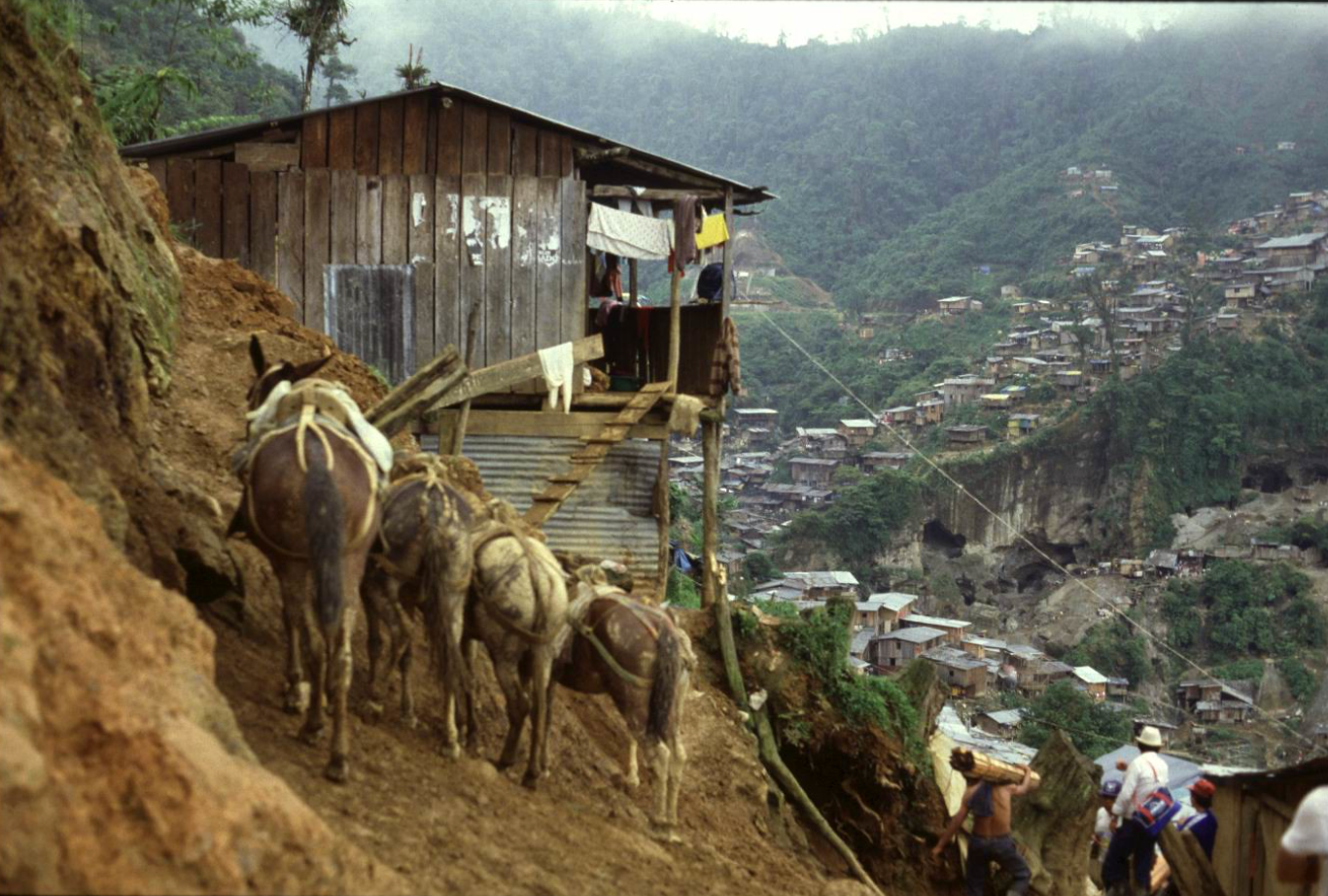
Illegal mining operations linked to Chinese networks have accelerated severe environmental degradation across the Amazon. In Bolivia, mining companies connected to China—often operating under the guise of local cooperatives—are driving social and environmental damage throughout the Amazon region. These operations have spurred the opening of illegal roads in national parks, including Madidi National Park, which contains nearly 14 percent of the world's species. These clandestine routes intertwine with drug trafficking corridors, consolidating a network of transnational environmental crime extending far beyond Bolivia's borders.
Chinese criminal elements are involved throughout the illegal mining value chain: purchasing metals in China, paying for them locally, and supplying mercury through Chinese shopkeepers who also facilitate other illicit activities. In Peru, similar patterns emerge, with Chinese entities purchasing gold both locally and globally while supplying materials, tools, food, and clothing to miners operating in the Peruvian Amazon.
The environmental consequences are devastating. Mercury contamination poisons local communities, causing malformations, infertility, and other serious health problems while making water resources inaccessible. Indigenous and Afro-descendant communities face forced displacement due to contamination or intimidation by criminal organizations. The deforestation driven by these operations causes irreversible habitat loss, species extinction risks, and releases greenhouse gases contributing to climate change.
WILDLIFE TRAFFICKING
Wildlife trafficking has become a major criminal enterprise driven by demand for traditional Chinese medicine. Chinese networks now lead illegal jaguar trafficking from Ecuador, Peru, Bolivia, and Suriname. The trade includes reptile skins, shark fins, jaguar and puma skins, butterflies, totoaba swim bladders, and seahorses—all destined for Asian markets.
ILLEGAL LOGGING
Illegal logging operations along the Peruvian-Ecuadorian border represent another significant hotspot, with Chinese involvement contributing to deforestation that enables illegal mining and facilitates smuggling of materials involved in other illicit activities.
"
As one expert noted, "China has become the most popular money launderer for drug trafficking in Latin America." This money laundering capacity enables and amplifies environmental crimes by providing capital for illegal mining, logging, and wildlife trafficking operations; creating financial networks that obscure the proceeds of environmental crimes; and establishing criminal infrastructure that serves multiple illicit economies simultaneously.
The Precursor Chemical Connection
The connection between Chinese precursor chemical trafficking and environmental degradation operates through multiple pathways. Chinese companies—including state-owned enterprises—produce and export chemical precursors for fentanyl production, openly advertising their products on regular internet sites targeting Spanish-speaking customers. They detail how to hide merchandise in makeup packaging, demonstrating clear knowledge that they're exporting illegal substances.
This trade generates massive illicit revenue streams that Mexican cartels and other criminal organizations reinvest in environmental crimes. Through the "Flying Money" scheme, Mexican narcotrafficking gangs in the U.S. deliver bulk cash to Chinese mafia groups, who then transfer corresponding amounts of RMB to cartel-affiliated groups in Mexico. These groups use the laundered money to purchase products from China without paying full customs duties—completing a cycle that funds further criminal expansion into environmental crimes.
As one expert noted, "China has become the most popular money launderer for drug trafficking in Latin America." This money laundering capacity enables and amplifies environmental crimes by providing capital for illegal mining, logging, and wildlife trafficking operations; creating financial networks that obscure the proceeds of environmental crimes; and establishing criminal infrastructure that serves multiple illicit economies simultaneously.
Infrastructure and Criminal Convergence
The expansion of Belt and Road Initiative (BRI) projects—which have brought over $203 billion in Chinese investment to Latin America since 2005—has created physical infrastructure that both precursor chemical trafficking and environmental crimes exploit. Chinese construction in remote, jungle-covered areas creates contact points between Chinese workers and local criminal networks, blurring boundaries between legal and illegal economies.
"As Belt and Road Initiative projects spread across the region, Chinese criminal networks and their illegal activities are also strengthening," according to experts studying the phenomenon. Chinese-controlled ports serve as convergence points where precursor chemicals arrive and illegally extracted resources depart.
The opacity of Chinese port operations facilitates both chemical trafficking and environmental crime.
Many criminal networks previously engaged solely in drug trafficking or illegal mining have added ecological crimes to their portfolios, effectively doubling wildlife trafficking in the region. This phenomenon is known as "criminal convergence"—where Chinese groups simultaneously engage in multiple illicit activities.
State Permissiveness and Strategic Implications
Investigations suggest this phenomenon is enabled by structural permissiveness—and at times complicity—from the Chinese state. State-owned companies producing precursors receive tax refunds for exports with no legitimate uses, suggesting the Chinese state benefits directly or indirectly from activities that fuel Latin American criminal economies.
Latin American police forces historically have not made significant efforts to penetrate Chinese communities in their jurisdictions, allowing criminal activities to operate with limited oversight. This lack of visibility into Chinese communities represents a national security risk for both Latin American countries and the United States.
The environmental crimes perpetrated by Chinese-linked networks cause severe harm extending beyond ecological damage. Latin America accounted for 166 murders of land and environmental activists in 2023—85 percent of the global total and the highest figure since 2012. Nearly half of the victims were Indigenous people defending their territories against extractive industries where legal and illegal activities overlap.
Conclusion
The expansion of Chinese organized crime in Latin America represents not just an environmental threat but a challenge to regional sovereignty, democratic governance, and human security. These networks exploit weak institutions, degrade the environment, and generate illicit revenue streams that intersect with broader strategic interests. The convergence of weak institutions, endemic corruption, and Chinese criminal expansion has created what analysts describe as a "Chinese transnational criminal ecosystem" with increasingly deep roots in the region.
Addressing this challenge requires expanded cooperation among Latin American countries, the United States, and international partners to combat organized crime, protect regional sovereignty, and preserve the Amazon and other critical ecosystems for future generations.
Sources and Further Reading:
- Small Wars Journal, The Impact of Chinese Organized Crime in Latin America on the Region's Resources and Environment, January 30, 2026
- Small Wars Journal, El Centro Fellow Dr. Vanda Felbab-Brown provides testimony before the Senate drug caucus about Chinese organized crime in Latin America, December 16, 2025
- Diálogo Américas, The Other Silk Road: The Link Between China's Expansion and Its Criminal Networks in Latin America – PART III, December 11, 2025
- Diálogo Américas, The Other Silk Road: The Link Between China's Expansion and Its Criminal Networks in Latin America – PART II, October 25, 2025
- Latinoamérica21, Organized crime and human development: the urgency of a structural response in Latin America, October 8, 2025
- TalCual Digital, Organized crime and human development: the urgency of a structural response in Latin America, October 25, 2025
- Diálogo Américas, The Other Silk Road: The Link Between China's Expansion and Its Criminal Networks in Latin America – PART I, September 5, 2025
- USAWC, Central and South America and the Caribbean - USAWC 2025-26 Strategic Estimate, July 10, 2025
- Small Wars Journal, Criminal Threat Convergence Must Be Elevated as a National Security Urgency, June 25, 2025
- Southern Pulse, Beyond 2025, May 12, 2025
- InSight Crime, 6 Illegal Economies Threatening Latin America's Ecosystems, April 22, 2025
- Instituto Igarapé, Annual Report 2024, April 22, 2025
- USAWC, Toward a More Effective DoD Contribution to Strategic Competition, February 24, 2025
- Friedrich-Ebert-Stiftung, LA EVOLUCIÓN DEL CRIMEN ORGANIZADO EN AMÉRICA LATINA, January 31, 2025
- Diálogo Político, Keys to Understanding China, February 19, 2024
- InSight Crime, Stolen Amazon: The Roots of Environmental Crime in Five Countries, November 8, 2022
- InSight Crime, The Roots of Environmental Crime in the Colombian Amazon, September 1, 2021
- Drawn from a Southern Pulse Report