Delcy No Longer Sanctioned
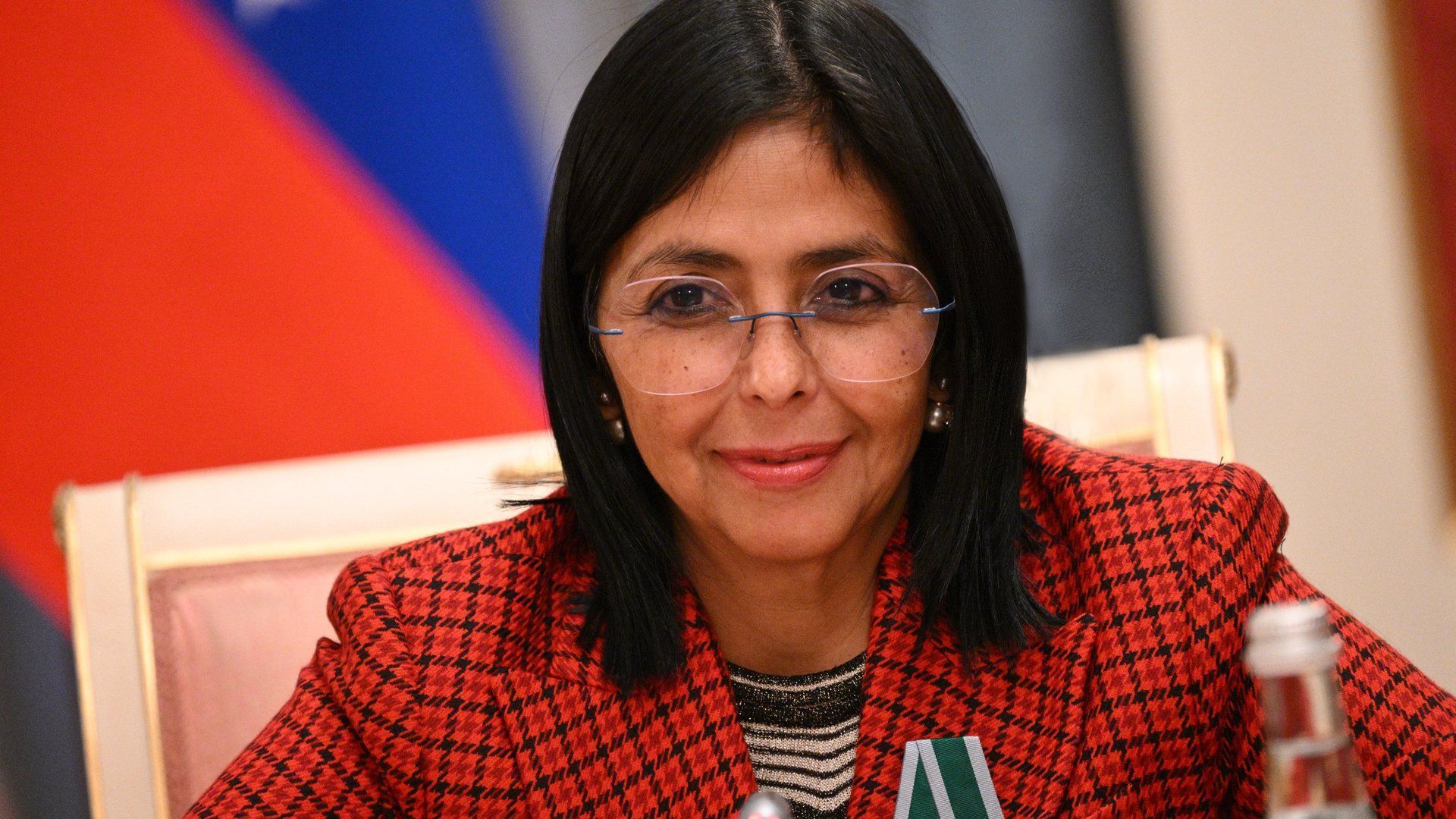
On 1 April 2026, the U.S. Treasury Department's Office of Foreign Assets Control removed Delcy Rodriguez from the Specially Designated Nationals (SDN) list, formally lifting sanctions that had been in place since September 2018. The move completes a sequence Washington has been building since U.S. forces seized Nicolas Maduro on 3 January: recognition, embassy reopening, and now sanctions relief. Each step has been conditional. Each step has been sequential.
The mainstream read is that this represents a diplomatic thaw between Washington and Caracas. The more precise read is that it is a controlled asset transfer. Rodriguez's removal from the SDN list unlocks the most consequential practical consequence of the entire post-Maduro transition: Citgo. It also confirms something that her public statements have obscured. Washington has chosen its interlocutor, and it is not the democratic opposition.
Research conducted with NELSON AI.
100% Human Verfied.
Nothing in this briefing should be construed as legal advice. Readers should consult qualified legal counsel before making decisions based on any legal or regulatory frameworks discussed herein.
The Citgo Calculation
Citgo Petroleum, Venezuela's U.S.-based refining subsidiary and the crown jewel of its foreign assets, has been run since 2019 by supervising boards appointed by an opposition-led congress that no longer exists. Rodriguez's removal from the SDN list removes the primary legal obstacle to changing that. According to Reuters, Treasury officials have already contacted existing Citgo board members to inform them that new appointments made by Rodriguez's administration are expected to be authorized, provided individual nominees clear Washington's vetting. The State Department must also sign off, and OFAC retains policy guidance authority over each appointment. Some names proposed by Rodriguez's team have already been rejected.
The practical picture is therefore more controlled than the headline suggests. Rodriguez does not simply inherit Citgo. She inherits access to a process, one Washington manages at every step. Individual board nominees require U.S. clearance. The ongoing creditor litigation entangling Citgo's U.S. assets remains active. PDVSA's March appointment of Asdrubal Chavez, a cousin of the late Hugo Chavez, as head of all U.S. subsidiaries signals Caracas is moving quickly, but the transaction is not complete.
The Citgo question exposes an underlying logic of the entire post-Maduro arrangement. Washington is not handing Venezuela back to Venezuelans. It is transferring operational control of Venezuela's most valuable foreign asset to an interlocutor it has vetted and can pressure. The SDN removal is the legal mechanism. Citgo is the prize. The vetting process is the leash.
Sanctions as a Management Tool
Rodriguez's removal from the SDN list fits a documented pattern of how the Trump administration has deployed sanctions relief as a transactional instrument. In October 2025, OFAC removed former Paraguayan President Horacio Cartes from the SDN list following a period of rapprochement with Washington. The same month, the administration lifted sanctions on Bosnian Serb leader Milorad Dodik, without explanation, one day after Dodik met with Russian Foreign Minister Sergey Lavrov. Bosnia's Foreign Minister described the move as part of a back-channel deal, adding that sanctions could always be reimposed.
That last point is the operative one. The Trump administration has demonstrated consistently, in trade negotiations, in bilateral diplomacy, and in Venezuela itself, that sanctions relief is conditional access. Rodriguez's own public response acknowledged this dynamic: she welcomed the decision while immediately calling for broader sanctions on Venezuelan entities and individuals to be lifted, signaling that she understands the removal as a first installment, not a final settlement.
The individual nature of this removal also carries specific weight. The 2023 sectoral sanctions relief on Venezuela covered state-owned companies and oil operations, not persons. Removing Rodriguez personally from the SDN list is a more unusual and more deliberate step. Individual sanctions tied to human rights and corruption are harder to lift by design. Washington lifted them anyway. The signal is that Rodriguez has delivered enough, for now, and that the architecture for reimposition remains intact if she stops delivering.
The Opposition's Diminishing Hand
Maria Corina Machado, Nobel Peace Prize laureate, winner of the 2023 opposition primaries, and the figure most Western governments regard as Venezuela's legitimate democratic alternative, is not part of this arrangement. Trump said as much in January, telling reporters that Machado lacks the "respect" within Venezuela to govern. The more precise explanation comes from analysts who note that Machado does not control Venezuela's security forces, and Rodriguez does. In a transition managed first and foremost for stability, that distinction determined the outcome.
The opposition is now navigating a debate between confrontation and accommodation. Ricardo Hausmann, Venezuelan economist and Harvard professor, has argued that the opposition must confront both Rodriguez and Trump, mobilizing to restore democratic rights. Others within opposition ranks warn that confrontation risks antagonizing the White House and reducing whatever residual influence Machado and her allies retain. The slogan "Delcy Avanza", Delcy Goes Forward, has begun circulating in parts of Caracas, a signal that Chavismo reads the current arrangement as consolidation, not transition.
More than 500 political prisoners remain detained. The Chavista apparatus, including the military, security services, judiciary, and political machinery, is structurally unchanged. Human rights organizations, including UN monitoring bodies, have documented that abuses have continued under Rodriguez's interim presidency. Washington has not made these conditions a public precondition for sanctions relief.
A Managed Handover, Not a Democratic Transition
The removal of Rodriguez from the SDN list is the most legible signal yet of what Washington's Venezuela strategy actually is. Maduro's capture on 3 January removed the person. It did not remove the system. Chavismo controls the legislature, the judiciary, the military, and the security services. Rodriguez governs through that system, not around it. Washington understands this and has chosen to work with it rather than dismantle it, because dismantling it would produce the instability Trump has explicitly said he wants to avoid.
The sequencing tells the story. Recognition in March. Embassy reopening on 31 March. SDN removal on 1 April. Each step has been a transaction, and each transaction has had a price. The price has been Rodriguez's cooperation on oil, on investment frameworks, and on the managed transfer of Venezuelan assets back to a Caracas that Washington can do business with. Citgo is the most visible line item. It will not be the last.
For companies and investors assessing Venezuela exposure, the relevant question is not whether normalization is underway. It is. The relevant question is what kind of normalization this is. The Chavista power structure remains intact. The legal proceedings around Venezuelan assets in U.S. courts remain active. Individual sanctions on other figures, Diosdado Cabello among them, remain in place. And Washington has demonstrated, in Bosnia, in Paraguay, and now in Venezuela, that what it grants it can rescind. Rodriguez knows this. Her public statements confirm she knows this. The arrangement is functional, and it is fragile, and those two things are not in conflict.
Sources and Further Reading
- U.S. Treasury / OFAC, Venezuela-related Designation Removal, 1 April 2026
- Reuters, Venezuela's Rodriguez readies Citgo board takeover, 1 April 2026
- Al Jazeera, US removes sanctions on Venezuela's interim President Delcy Rodriguez, 1 April 2026
- CBS News, Trump administration lifts sanctions on Delcy Rodriguez, 1 April 2026
- Caracas Chronicles, The US Has Recognized Delcy Rodriguez. What Now?, 19 March 2026
- Americas Quarterly, How Can Venezuela's Opposition Regain Momentum?, March 2026
- Atlantic Council, Delcy Rodriguez's Untenable Balancing Act, February 2026
- NPR, Venezuela's opposition reels from the sidelines, 8 January 2026
- OCCRP, US Lifts Sanctions Against Pro-Russian Bosnian Serb Leader, October 2025
- Caracas Chronicles, Washington Lifted Key Sanctions on the Maduro Regime. Now What?, 19 October 2023