Chile Investment Climate Assessment
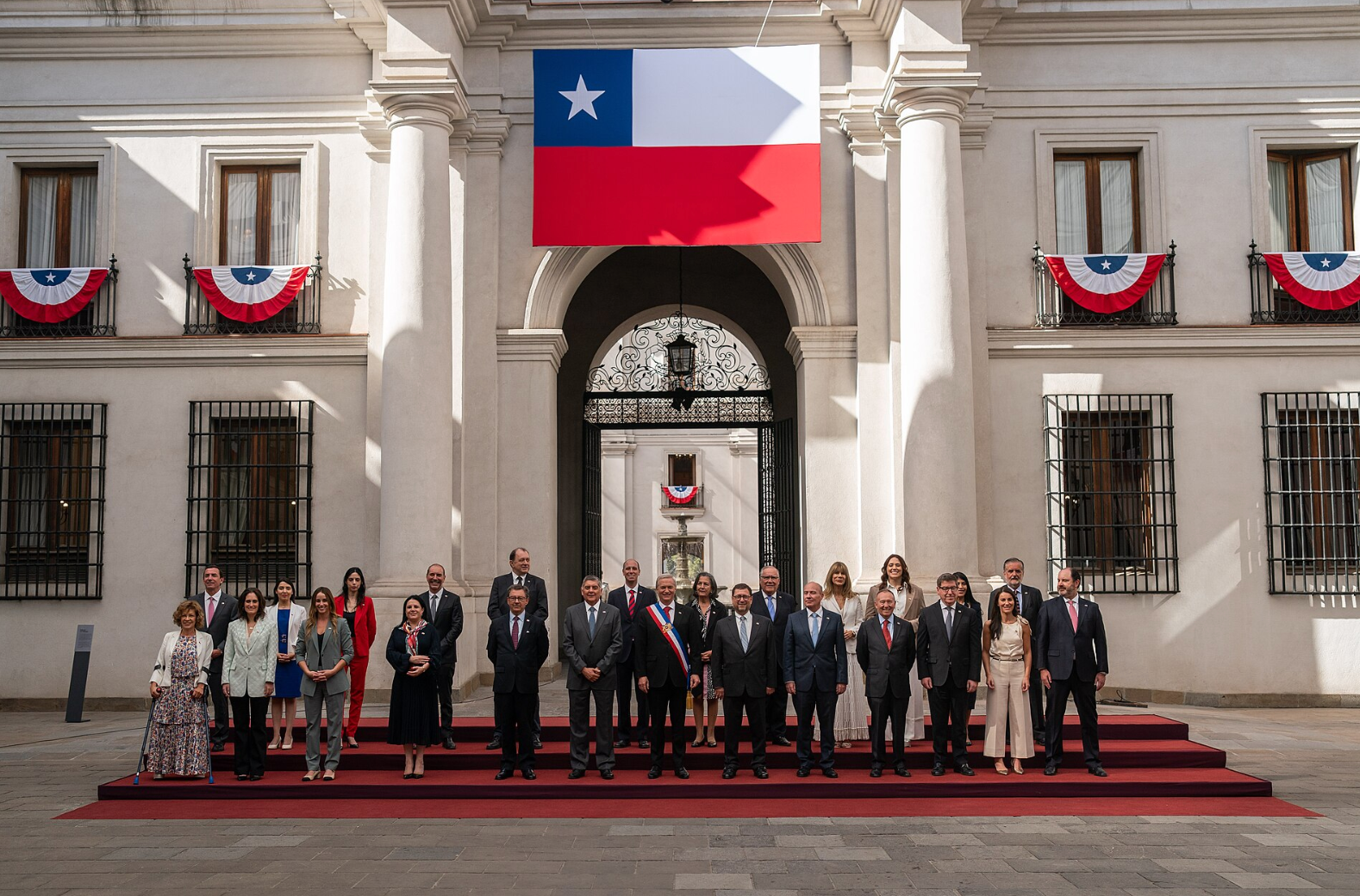
President José Antonio Kast assumed office on March 11, 2026 following a decisive electoral mandate — 58% of the vote, the largest margin in Chile's post-democratic history. For investors, his inauguration represents the most significant shift in Chile's investment climate in over a decade. The headline story is positive: a pro-market, pro-investment government replacing one that markets consistently viewed with skepticism. The Santiago Stock Exchange rose and the peso strengthened on election night.
However, this memo argues that the investment opportunity in Chile is real but structurally complicated by three forces that will define Kast's term: a geopolitical squeeze between Washington and Beijing that has no clean resolution; a corruption legacy within his own coalition that constrains his policy autonomy; and a deteriorating security environment driven by transnational organized crime that directly affects operational risk for businesses on the ground.
Research conducted with NELSON AI.
100% Human Verfied.
Nothing in this memo should be construed as legal advice. Investors should consult qualified legal counsel before making decisions based on Chilean regulatory frameworks discussed herein.
THE KAST ECONOMIC AGENDA — WHAT HAS CHANGED
The Market Signal
Markets reacted immediately and positively to Kast's election. Former Finance Minister Felipe Larraín stated: "If things go well, by the end of Kast's government we could think that Chile grows close to 4%." (El Comercio, Former Finance Minister of Chile: "If things go well, by the end of Kast's government we could think that Chile grows close to 4%", December 16, 2025)
That conditional — "if things go well" — is doing significant analytical work. The 4% growth scenario is achievable, but it depends on Kast successfully navigating the geopolitical, legislative, and security challenges outlined in this memo.
Mining and Regulatory Reform: The Ministry Merger
One of Kast's first and most consequential structural decisions was merging the Ministry of Mining and the Ministry of Economy into a single combined portfolio.
This drew immediate criticism from industry groups who argued it signals that investment facilitation, not sector-specific oversight, will be the defining priority. (Lithium Triangle Forced Labor Risk Assessment, March 16, 2026)
To lead the merged ministry, Kast appointed Daniel Mas — an agribusiness engineer and former vice-president of the Confederación de la Producción y el Comercio (CPC), with no prior mining experience. The CPC has historically advocated for streamlined permitting over mandatory consultation requirements.
For investors, this appointment signals:
- Faster permitting as a stated priority
- Reduced state enterprise privilege (Codelco, ENAMI) in favor of private sector-led extraction
- Redesign or elimination of the CEOL framework for lithium in favor of concessionable models
- Potential reduction in indigenous consultation requirements — a compliance risk for internationally listed companies
Lithium - The Crown Jewel and Its Complications
Chile is the world's second-largest lithium producer and the world's largest copper producer. By 2040, Chile's critical minerals revenue could reach USD 100 billion — roughly one-fifth of the global total. Global copper demand is projected to rise 50% by 2050, and lithium demand sevenfold. (IEA, Chile 2050 Energy Transition Roadmap, January 14, 2026)
Kast's platform on lithium has three direct investment implications:
- Eliminating or redesigning the CEOL framework in favor of concessionable lithium — opening the sector to private investment in a way the Boric government resisted
- Accelerating permitting reform through SEA processing cuts
- Reducing Codelco's privileged position in favor of private sector-led extraction
Chile was already accelerating new lithium contracts before Kast took office. (Minería en Línea,
Chile acelera nuevos contratos de litio, February 2026) Under Kast, this trajectory is expected to accelerate further. (Minería en Línea,
Chile pone a prueba su política minera con Kast, March 2026)
Compliance Note for Investors
The ministry merger and the appointment of a minister with no mining background creates three distinct compliance risk scenarios for companies operating in the lithium sector: CEOL redesign without labor safeguards; accelerated permitting that bypasses environmental review; and reduced indigenous consultation that creates downstream legal exposure for internationally listed companies.
These risks are particularly acute for companies subject to U.S., EU, or UK supply chain due diligence requirements.
Congressional Constraint
Kast's economic agenda faces a fragmented Congress without clear majorities. His first year — the legislative honeymoon — will be decisive. Security, migration, and economic growth will concentrate public attention and require more negotiation than imposition. (Latinoamérica21, From Boric to Kast: expectations, realities, and the limits of profound change, December 19, 2025)
Investors should not assume that Kast's electoral mandate automatically translates into legislative capacity. The regulatory reforms most relevant to the investment community — permitting, environmental review, indigenous consultation — will require congressional support that is not guaranteed.
THE CHINA DIMENSION — THE DEFINING TENSION
The Structural Reality
Chile's dependence on China is not ideological — it is structural:
- 38% of all Chilean exports go to China (Congressional Research Service, IF10880)
- ~92% of lithium exports go to Asian markets, primarily China (IEA, Chile 2050 Energy Transition Roadmap, January 14, 2026)
- Chinese companies have invested at least $17.7 billion in Chile since 2010, concentrated in energy, mining, telecommunications, and transportation (Congressional Research Service, IF10880)
- China is present in energy, lithium, transportation, and telecommunications, configuring an economic power that no president can ignore ([Carel Fleming, Jara and Kast must decide: Washington or Beijing](no link in the database), December 6, 2025)
The Submarine Cable: A Crystallizing Symbol
The Chile-China Express — a proposed optical fiber cable connecting Valparaíso with Hong Kong, involving China Mobile, HMN Technologies, and Huawei — became the defining geopolitical flashpoint of the presidential transition. The sequence:
- A 30-year concession was signed, then revoked 48 hours later
- The U.S. revoked the visas of three Chilean officials
- Kast attended Trump's Shield of the Americas summit in Miami, read by Beijing as total U.S. alignment
- The cable controversy broke the bilateral transition process between Boric and Kast entirely
The cable remains at step one of 13 required approvals and can be quietly shelved. But as one analyst noted: "The cable issue made Washington jump because it is very easy to stop what does not yet exist... very easy to dilute just by stopping talking about it — something very different from the port of Chancay which is already an effective connection to China." (El Comercio, Do not cross lines, Jose Antonio, March 7, 2026)
More than 95% of global data traffic travels through submarine cables. A direct Chile-China cable would create a data route bypassing nodes under allied supervision, giving companies subject to China's National Intelligence Law of 2017 potential access to regional information traffic. (CIPER Chile, The cable, the visas, and the pending lesson, February 24, 2026)
The Geopolitical Squeeze
Kast is caught in a binary that has no clean resolution:
Washington's position is explicit: "You cannot do business with China that compromises American security, receive bribes for it, and then spend that money in Miami... Either you become millionaires through bribes and favors linked to the Chinese Communist Party and lose your visa, or you maintain access to the United States by renouncing that easy and opaque money. There is no third way." (Interferencia, Boric and other ministers would be left without a visa, March 1, 2026)
For investors, this squeeze creates
policy unpredictability in sectors where Chinese and American capital compete — particularly telecommunications, energy infrastructure, and port logistics.
"
Kast has no way out. He is in checkmate. If he closes the doors to China, he loses authority and the repudiation of Chile for not defending the sovereignty of his country.
The Corruption Legacy: The Hidden Variable
This is the element most likely to be underweighted by investors focused on the headline political shift. Multiple credible analysts document a pattern in which Chinese intelligence has systematically cultivated Chilean politicians, military officers, and business figures:
"The danger for Kast will be inheriting the commitments that the Chilean right has with Chinese intelligence services, which are not few. The businesses and bribes between the Chinese Communist Party and the government of Sebastián Piñera were blatant and left several pending issues. The bribes were paid in advance and the Chilean ministers did little to comply, including some who have already met with Kast and are now offering to return." ([Carel Fleming, China needs Chile, not the other way around](no link in the database), December 27, 2025)
The Luksic family — one of Chile's most powerful business groups — "occupies a central place in the relationship with China." The concern is not the existence of large economic groups, but that "the Chilean State renounces exercising strategic sovereignty over them. When private interests are confused with foreign policy, the country stops negotiating as a State and starts behaving as an obedient supplier." ([Carel Fleming, China needs Chile, not the other way around](no link in the database), December 27, 2025)
U.S. Ambassador Brandon Judd is described as already having "the names and details on his desk." ([Carel Fleming, China needs Chile, not the other way around](no link in the database), December 27, 2025)
Investment implication
Companies entering partnerships with Chilean business groups that have deep China ties should conduct enhanced due diligence. The risk of U.S. secondary sanctions targeting individuals or entities implicated in Chinese intelligence relationships is not theoretical — it is an active policy tool being deployed.
Chile's Strategic Leverage: The Underplayed Card
The conventional framing — that Chile needs China — is analytically incomplete. As one analyst argues: "It is China that urgently needs Chilean copper and lithium to sustain its energy transition, its electric industry, and its ambition for global technological leadership. Without these minerals, the narrative of China as the 'green giant' becomes fragile." ([Carel Fleming, China needs Chile, not the other way around](no link in the database), December 27, 2025)
Chile theoretically has leverage to demand technology transfer, local industrialization, and value-added agreements rather than simply exporting raw commodities. Whether Kast's government has the political will and institutional capacity to exercise that leverage is an open question — but the opportunity exists, and investors positioned in value-added processing rather than raw commodity extraction would benefit from it.
ORGANIZED CRIME — THE OPERATIONAL RISK LAYER
The Security Mandate
Security was the dominant issue of Kast's campaign. He won, in significant part, because Chileans demanded a harder line against rising crime and the presence of transnational gangs. This creates both a policy opportunity and an operational risk context that investors must understand.
Chinese Organized Crime: The Intersection of Trade and Criminality
Chile's deep trade relationship with China has created structural cover for Chinese organized crime. "Chinese organized crime has benefited from Chilean ties before... These ties have helped Chinese organized crime mask illicit activities, such as smuggling in migrants or buying stolen copper." (InSight Crime, Why Chinese Mafias Are Moving Into Chile, September 14, 2023)
This is not a peripheral issue for investors. Stolen copper — a direct threat to mining operations — is one documented channel. The presence of Chinese criminal networks in retail (the "Chinese malls" controversy) and in money laundering through legitimate business structures creates reputational and compliance exposure for companies operating in the same sectors.
Academic expert Pablo Ampuero, who has researched Sino-Chilean relations extensively, noted that Chinese malls in Chile are "Chinese competing against each other" rather than a coordinated state operation — but acknowledged the broader security concerns around Chinese migration and criminal networks operating in the country. ([Lun Lee, Pablo Ampuero, academic expert on China: "There is no coordination behind Chinese malls, they are Chinese competing against each other"](no link in the database), March 28, 2025)
Tren de Aragua and Transnational Gang Presence
Beyond Chinese organized crime, Chile faces a broader transnational gang crisis. Tren de Aragua — the Venezuelan criminal organization — has established a significant operational presence in Chile, contributing to the security deterioration that drove Kast's electoral mandate. This gang's activities include extortion, human trafficking, and violent crime that directly affects business operating environments in urban areas.
The Intelligence Penetration Dimension
The organized crime picture in Chile cannot be separated from the intelligence penetration picture. Chinese intelligence operations in Chile are documented as using "bribing and blackmailing Chilean politicians, police, and military who are recorded with prostitutes (women and men) in the luxury hotels of Santiago."
During the Piñera government, connections were made with universities "to install espionage equipment and thus observe and sabotage satellites of other countries." ([Carel Fleming, Operation Chile: How the powers seek to influence the presidential elections](no link in the database), November 8, 2025)
For investors, the practical implication is that
due diligence on Chilean partners and counterparties must include an assessment of their exposure to Chinese intelligence relationships — not just their financial profile.
OPPORTUNITIES AND RISKS — SUMMARY MATRIX
Opportunity Sector Timeframe Confidence
- Permitting acceleration for copper and lithium projects
- Mining Near-term High Lithium sector opening to private investment via CEOL redesign
- Mining/Energy 12–24 months
- Medium-High U.S. investment in critical minerals as China alternative
- Mining Medium-term
- Medium Infrastructure investment aligned with U.S. security interestsTelecom/Energy
- Medium-term
- Medium Growth toward 4% GDP if agenda succeeds
- All sectors
- End of term
- Medium Regional conservative bloc creating policy alignment with Peru, Ecuador, Argentina
- Multi-country Near-term MediumValue-added processing opportunity if Chile exercises mineral leverage
- Manufacturing Long-term Low-Medium
Risk Sector Severity Probability
- Congressional fragility blocking legislative agenda All sectors High
- High Corruption exposure within Kast's coalition (China legacy)All sectors High
- Medium-High U.S. secondary sanctions targeting Chilean business figures
- Finance/Mining High
- Medium Chinese economic retaliation (selective, not total)
- Mining/Trade Medium
- Medium Geopolitical policy whiplash creating regulatory uncertainty
- Telecom/Energy/Mining Medium
- MediumTransnational organized crime (Tren de Aragua, Chinese networks)Operations
- Medium-High High Compliance exposure from reduced indigenous consultation
- Mining Medium-High
- Medium Ministry merger creating sector oversight gaps
- Mining Medium
- Medium China's economic slowdown reducing copper/lithium demand
BOTTOM LINE FOR INVESTORS
Chile under Kast is a more attractive investment destination than it was under Boric — on the fundamentals. The direction of travel on permitting, private sector access to lithium, and macroeconomic management is positive. The market has already priced in some of this optimism.
However, three structural complications require active management rather than passive optimism:
The geopolitical squeeze is real and unresolved. Investors in sectors where Chinese and American capital compete — telecom, energy infrastructure, port logistics — face policy unpredictability that will not resolve quickly. The submarine cable is the current flashpoint; it will not be the last.
The corruption legacy within Kast's own coalition is the most underweighted risk. The documented depth of Chinese intelligence penetration of the Chilean right means that Kast's policy autonomy is constrained in ways that are not visible from the outside. An intelligence exposure event — a leak, a defection, a U.S. disclosure — could paralyze his legislative agenda at any point.
The security environment requires operational risk management, not just political risk analysis. Transnational organized crime — both Venezuelan (Tren de Aragua) and Chinese networks — creates direct operational exposure for businesses on the ground. This is not a background condition; it is an active variable.
The investor who succeeds in Chile over the next four years will be the one who reads Kast's mandate accurately: a genuine opening for private capital, constrained by geopolitical forces, a compromised coalition, and a security crisis that his government is only beginning to address.
Want more research on Chile and Kast?
Try asking Nelson one of these questions:
- What is the specific status of the CEOL framework redesign, and which lithium assets are most immediately affected?
- Which Chinese companies currently hold active concessions or contracts in Chile's energy and mining sectors, and what is their exposure to U.S. secondary sanctions?
- What is the documented presence of Tren de Aragua in Chile's mining regions, and how does it affect operational security for mining companies?
- What is the current state of Chile's investment screening mechanism for critical infrastructure, and is Kast moving to formalize one?
- How does the Port of Chancay in Peru change the logistics calculus for Chilean mineral exports?
Sources and Further Reading
- Lithium Triangle Forced Labor Risk Assessment - March 2026, March 16, 2026
- El Comercio, Do not cross lines, Jose Antonio, a chronicle by Fernando Vivas about Kast, the president-elect of Chile, March 7, 2026
- Interferencia, Boric and other ministers would be left without a visa, March 1, 2026
- CIPER Chile, The cable, the visas, and the pending lesson: Chile facing the national security dilemma, February 24, 2026
- Sergio Pintado (Sputnik), [A submarine cable places Chile in the middle of the tension between the USA and China](no link in the database), February 19, 2026
- El Comercio, Kast and his concern about crime, migration and illegal mining: everything that his visit to Peru left, January 9, 2026
- CIPER Chile, The new era of Trump: geopolitical realism and conservative counterrevolution, January 20, 2026
- IEA, Chile 2050 Energy Transition Roadmap, January 14, 2026
- Carel Fleming, [China needs Chile, not the other way around](no link in the database), December 27, 2025
- Latinoamérica21, From Boric to Kast: expectations, realities, and the limits of profound change, December 19, 2025
- El Comercio, Former Finance Minister of Chile: "If things go well, by the end of Kast's government we could think that Chile grows close to 4%", December 16, 2025
- Carel Fleming, [Jara and Kast must decide: Washington or Beijing](no link in the database), December 6, 2025
- Carel Fleming, [Operation Chile: How the powers seek to influence the presidential elections](no link in the database), November 8, 2025
- IDB, Minerales-estrategicos-de-Chile, August 22, 2025
- Nicolás Massai D., [Alfredo Moreno from the Commission for Peace: "The State does not have the right to act regarding what a private owner has"](no link in the database), May 14, 2025
- Lun Lee, [Pablo Ampuero, academic expert on China: "There is no coordination behind Chinese malls, they are Chinese competing against each other"](no link in the database), March 28, 2025
- Congressional Research Service, IF10880 — Chile: An Overview, no date available
- InSight Crime, Why Chinese Mafias Are Moving Into Chile, September 14, 2023
- Drawn from a Southern Pulse Report, May 2, 2023