After El Mencho, GDL Is Still CJNG's City
El Mencho's killing removed a man. It did not remove an organization. The city hosting 2026 FIFA World Cup games remains the Jalisco New Generation Cartel's home base — and succession violence is the near-term risk that security planners need to price in.
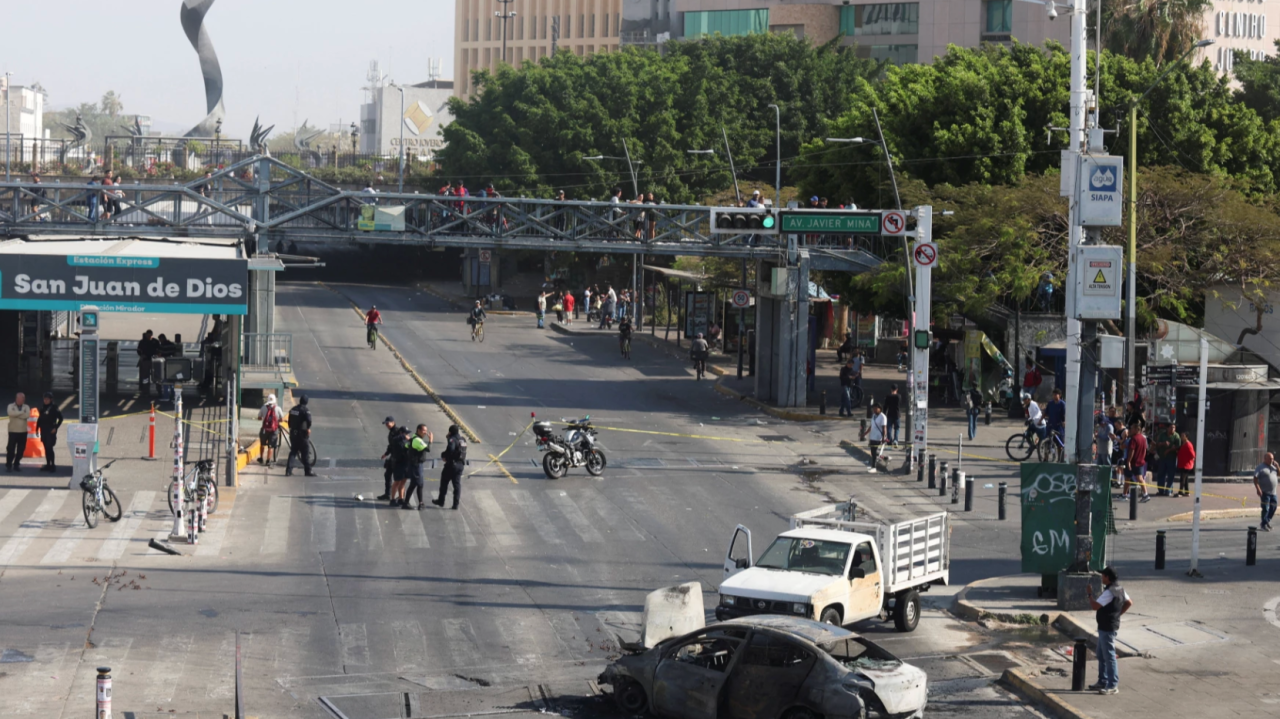
On 22 February 2026, the Mexican military killed Nemesio Oseguera Cervantes, alias El Mencho, in a targeted operation in Tapalpa, Jalisco state. The operation, carried out with U.S. intelligence support, removed one of the most powerful drug lords on the planet. Within hours, Guadalajara — a city of five million people and a confirmed FIFA World Cup host — was paralyzed. Highways were blocked by burning vehicles, businesses were set alight, gunmen and security forces battled near a National Guard base, and residents sheltered in place. Twenty-five National Guard members were killed. Four soccer matches were cancelled. Schools closed. The violence subsided within days, but the question it raised has not: does Guadalajara remain a viable host for four FIFA World Cup matches scheduled for June and July 2026?
The answer, based on InSight Crime's reporting across the weeks following El Mencho's killing, is that the CJNG's hold on Guadalajara is structural, not personal. El Mencho built a franchise operation — not a personality cult. The organization survives him. The risk now is not collapse but succession violence, and the months between now and the World Cup opening match are precisely when that violence is most likely to concentrate.
Research conducted with NELSON AI.
100% Human Verfied.
Nothing in this briefing should be construed as legal advice. Readers should consult qualified legal counsel before making decisions based on any legal or regulatory frameworks discussed herein. Crime statistics in Latin America may not always be fully reliable; official figures, particularly regarding homicides and disappearances, may undercount actual incidents.
El Mencho's Model: Control Without Presence
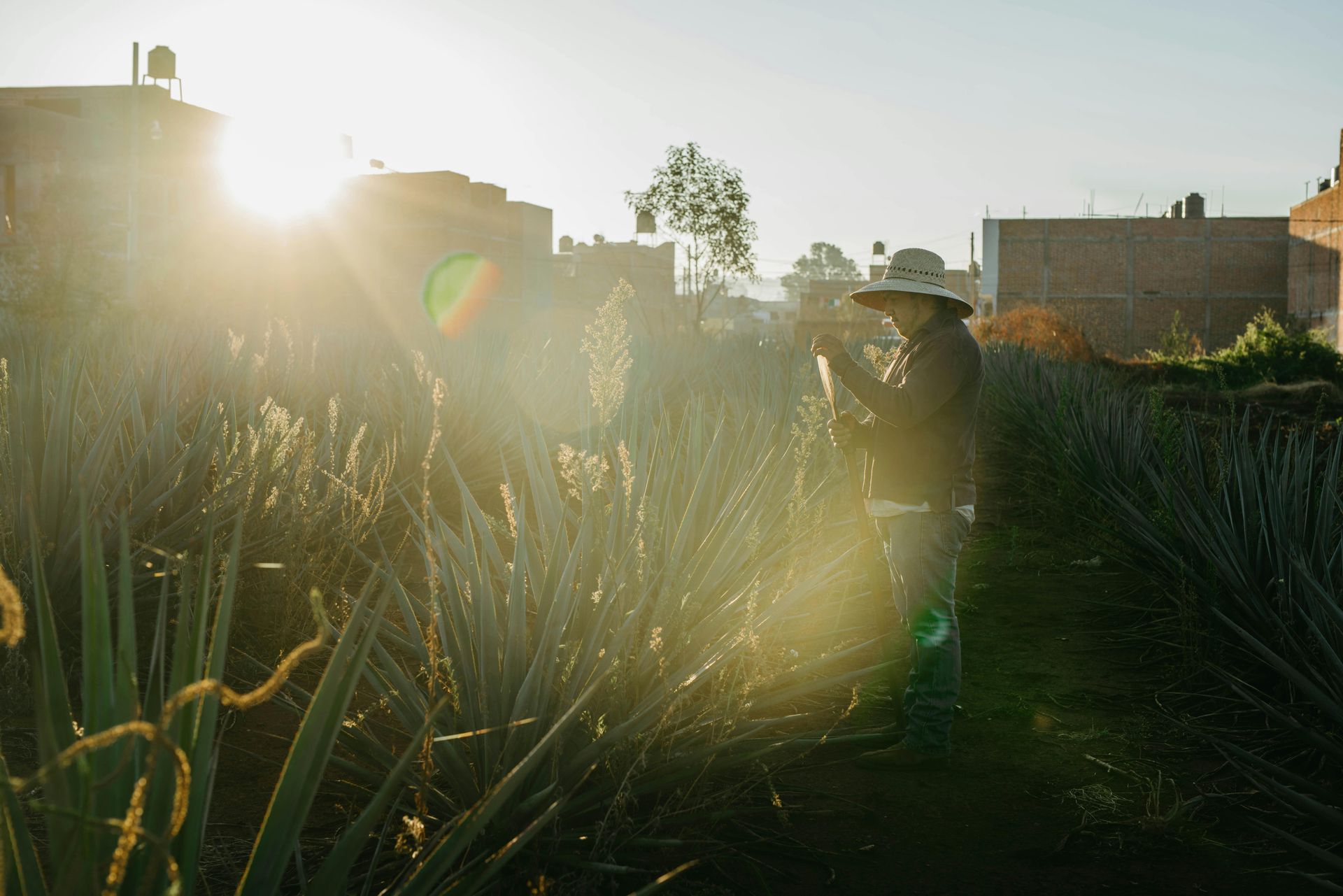
Nemesio Oseguera Cervantes spent the last decade of his life in deep hiding, directing the CJNG from mountain redoubts in Jalisco while building the most territorially expansive drug trafficking organization in Mexican history. By the time of his killing, the CJNG operated across 27 of Mexico's 31 states and held meaningful international reach into the United States, Europe, and Asia. El Mencho did this not by centralized command but by franchising: licensing smaller criminal groups to operate under the CJNG brand in exchange for recurring fees, territorial deference, and logistical access.
In Guadalajara, that model produced what InSight Crime describes as "invisible control." The cartel does not announce itself at street level in Jalisco the way it does in contested territories. Extortion is systematized and largely hidden. Drug retail operates through controlled distribution networks. The architecture of corruption — police, municipal officials, business owners — is deeply embedded. As researcher Jeronimo Barba of the University of Guadalajara observed, Guadalajara is a CJNG city that does not look like one. That invisibility is a feature, not a gap in coverage.
The February violence confirmed the model. The burning roadblocks and armed convoys that paralyzed the city were not signs of a cartel in crisis. They were a coordinated demonstration by a mid-level command structure that retained the capability to mobilize at scale, hours after its nominal leader was killed. InSight Crime's assessment is that the response functioned as both a loyalty signal and a negotiating position: a message to the Mexican government and to internal factions that the organization remained operational.
Succession Risk: Where the Near-Term Danger Concentrates
The structural durability of the CJNG does not mean the transition is risk-free. The opposite is true. InSight Crime's reporting identifies two primary succession candidates with overlapping territorial claims: El Jardinero, who controls Jalisco, Nayarit, and Michoacan; and El Sapo, who controls most of Jalisco including Guadalajara and Puerto Vallarta. No clear heir apparent has emerged. The parallel InSight Crime draws to the Sinaloa Cartel's violent fragmentation following the arrest of Ismael Zambada Garcia, alias El Mayo, in July 2024 is instructive: leadership transitions in these organizations are almost never orderly, and the assets at stake in Jalisco are too valuable for competing factions to cede without contest.
The critical variable is whether the CJNG's franchise structure holds through the succession period. If mid-level commanders remain aligned behind a single successor, visible violence stays suppressed — the cartel's preferred mode of operation. If two or more factions contest control, the suppression mechanism breaks down and violence migrates to the surface. Forced disappearances in Jalisco have risen exponentially since approximately 2013, outpacing even homicide rates. A contested succession is likely to accelerate that trend before it is visible in headline violence figures.
A further complication: the Nueva Plaza Cartel, a CJNG splinter group that previously could not contest Guadalajara, now has an opening. Its encroachment attempts in the weeks and months following the succession period are the clearest leading indicator of whether the CJNG's invisible control model is holding or fracturing.
The World Cup Dimension
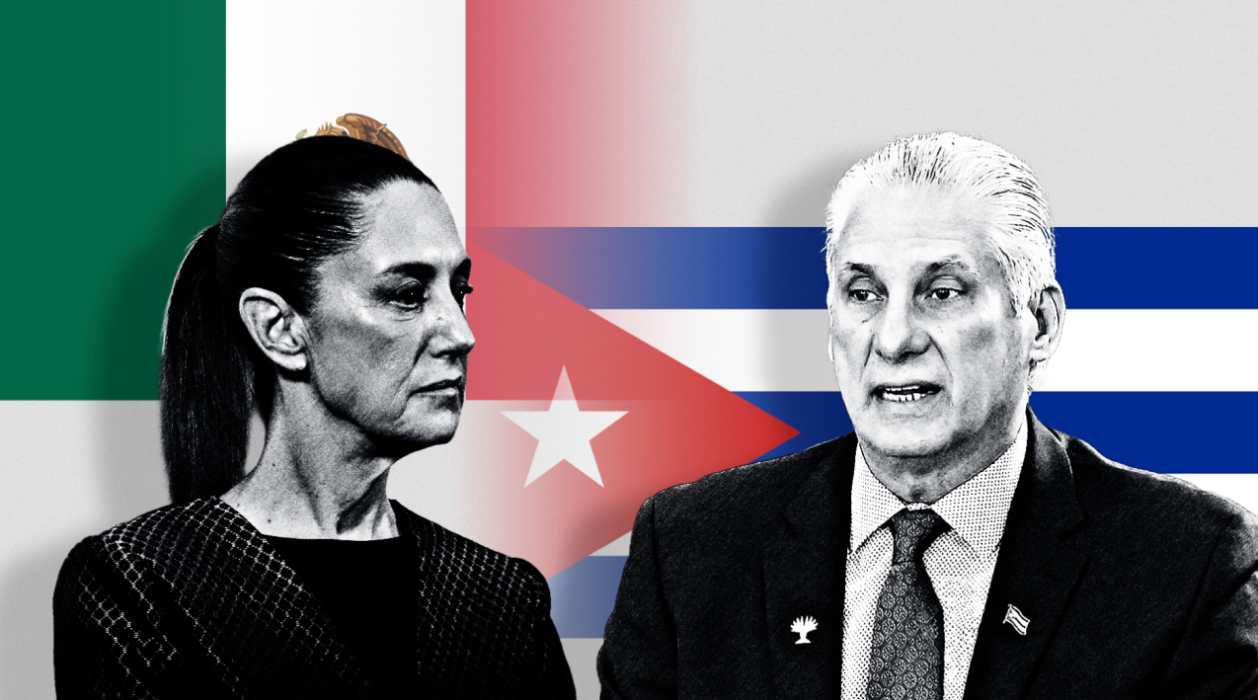
Guadalajara is scheduled to host four FIFA World Cup group-stage matches in June and July 2026, including Uruguay versus Spain. FIFA President Gianni Infantino stated publicly on 24 February 2026 that he was "very reassured" on Mexico's security situation following a call with President Claudia Sheinbaum. Jalisco Governor Pablo Lemus provided similar reassurances. Neither statement addressed the substance of the security challenge Guadalajara actually faces.
The challenge is not terrorism or mass-casualty violence directed at tourists or international visitors. The CJNG has no strategic interest in disrupting an event that will bring concentrated international media attention and security force deployments to its home city. The risk calculus runs the other way: the cartel benefits from the World Cup's normalizing effect — the signal that Guadalajara is safe for international business and tourism is also a signal that the cartel's invisible control model is working. Some analysts have speculated that the timing of the military operation against El Mencho, carried out months before the tournament, was not coincidental.
The realistic security risk for the World Cup period is ambient rather than targeted: extortion of vendors and hospitality businesses, disruption from succession-related violence that spills into public spaces, and the disinformation environment. In the hours following El Mencho's killing, AI-generated images and recycled footage
flooded social media, exaggerating the violence and amplifying panic beyond what conditions on the ground warranted. That disinformation dynamic, if replicated during the tournament itself, carries its own operational risks for security planners and business continuity teams.
The parallel InSight Crime draws to the Sinaloa Cartel's violent fragmentation following the arrest of Ismael Zambada Garcia, alias El Mayo, in July 2024 is instructive: leadership transitions in these organizations are almost never orderly, and the assets at stake in Jalisco are too valuable for competing factions to cede without contest.
The Government's Response and Its Limits
InSight Crime's assessment of the Sheinbaum government's approach is unsparing. Killing El Mencho is a
missed opportunity unless the government simultaneously dismantles the CJNG's money laundering networks, logistical infrastructure, and corruption nodes. The organization's revenue streams span fentanyl and methamphetamine trafficking, extortion, fuel theft, and franchise fees from affiliated groups across 27 states. A kingpin takedown that does not pursue the financial architecture leaves the franchise intact.
There is also a structural asymmetry in Mexico's security apparatus that limits what any single administration can accomplish. The CJNG's corruption networks in Jalisco run deep into municipal police forces, local government, and the business community. The organization has operated at this level for over a decade. Dismantling it requires sustained institutional effort that extends well beyond the media cycle of El Mencho's killing — and well beyond the World Cup window.
Synthesis
El Mencho's killing matters as a signal of Mexican state capacity and as a trigger for internal CJNG dynamics. It does not alter the fundamental architecture of organized crime in Guadalajara. The franchise model El Mencho built is designed to outlast any single leader. The city remains a CJNG city. The near-term risk is succession violence — concentrated, likely invisible in headline form, most acute in the months before the World Cup and in the period immediately following. Corporate security, investment, and compliance teams operating in the Guadalajara metropolitan area should treat this as an elevated-uncertainty environment for the remainder of 2026, not a resolved one.
Key Indicators to Monitor
Succession signals in Guadalajara's criminal landscape: shifts in extortion patterns in the city's commercial districts, targeted assassinations of mid-level CJNG figures, and any documented encroachment by the Nueva Plaza Cartel into areas it previously could not contest.
The Sheinbaum government's follow-through: whether the administration pursues sanctioned Guadalajara businesses, moves against the CJNG's financial architecture, or limits the operation to the kinetic takedown of El Mencho.
The disinformation environment in the months ahead: the February 2026 episode demonstrated that AI-generated content and recycled footage can amplify panic and distort the operational picture in real time. Teams should treat unverified social media reporting from Jalisco with heightened skepticism through the tournament period.
FIFA's security assessment timeline: any revision to Guadalajara's hosting status or to match scheduling would signal that the internal security calculus has shifted beyond what public reassurances currently reflect.
Resources and Reading
- InSight Crime — Breaking Analysis: Killing of El Mencho — Gamechanger or Missed Opportunity? (6 March 2026)
- InSight Crime — On the Radar: El Mencho's Capture — Gamechanger or Business as Usual? (2 March 2026)
- InSight Crime — CJNG Violence After the Killing of El Mencho: Power Play or Last Gasp? (24 February 2026)
- InSight Crime — How CJNG Control Works in Guadalajara, With or Without El Mencho (25 February 2026)
- InSight Crime — Breaking Analysis: What Does the Killing of El Mencho Mean for Mexico's Drug War? (26 February 2026)
- InSight Crime — How Mexico's CJNG Controls Guadalajara's Expanding Drug Market (July 2024)
- Tico Times / AFP — FIFA's Infantino 'Very Reassured' on Mexico World Cup Security (24 February 2026)
- R. Evan Ellis — Transnational Organized Crime in Mexico and the Government's Response, Small Wars Journal (29 April 2025)
- InSight Crime — How a Priest in Mexico Resists the CJNG's Incursions (15 February 2023)
- Pie de Página — Jalisco 22/F: Testimonios ciudadanos ante la violencia (1 March 2026)
NELSON Prompts Used
- What does InSight Crime report about what happened after El Mencho's death — the implications for CJNG's structure, leadership, and operations in Guadalajara and Jalisco state? Guadalajara is a 2026 FIFA World Cup host city — what does InSight Crime's coverage suggest about the public security environment there ahead of the tournament?
- How does InSight Crime assess Mexico's homicide trends in 2025, and what does that data reveal about CJNG's territorial control in Jalisco — including Guadalajara as a World Cup host city?
- Prepare a "Nelson Explains" briefing based on our conversation thus far. Guidelines: 600–800 words; Audience: sophisticated, internationally-minded readers interested in Latin America, geopolitics, and business — not academics, not casual news consumers; Narrative arc: open with the significance of El Mencho's killing and what it means for Guadalajara as a World Cup host city → who El Mencho was and what he built → how the CJNG controls Guadalajara and why that control survives his death → what the succession struggle means for near-term security → what the World Cup pressure does and does not change → the disinformation threat as a new risk vector; Tone: authoritative but accessible — the voice of someone who has been watching Mexican organized crime for decades and knows what matters and what doesn't; Do NOT use bullet points or numbered lists — this should read as a flowing, analytical piece; End with a "What to Watch" section of 2–3 forward-looking signals that readers should track; Include a one-line headline and a one-sentence subheadline at the top; and, Cite InSight Crime as the primary source throughout, by name, to showcase the quality of the underlying reporting.